Actaeon's Curiosity, 2026
Commissioned project by Serralves Museum
Group exhibition Paraíso curated by Luís Pinto Nunes
A project commissioned by the Serralves Museum for the exhibition Paraíso, curated by Luís Pinto Nunes, at Casa de Gramido in Gondomar, Portugal.
Alongside the work Poems of Problems, which belongs to the museum’s collection, three paintings from the Ephemera series were exhibited, as well as three concrete poems conceived for the exhibition space, one of which engaged in a dialogue with two paintings by Eduardo Luiz, also part of the museum’s collection.
The exhibition features works by Ana Manso, Charlotte Moth, Eduardo Luiz, and Sasha Gordon.
©Filipe Braga, courtesy Serralves Museum
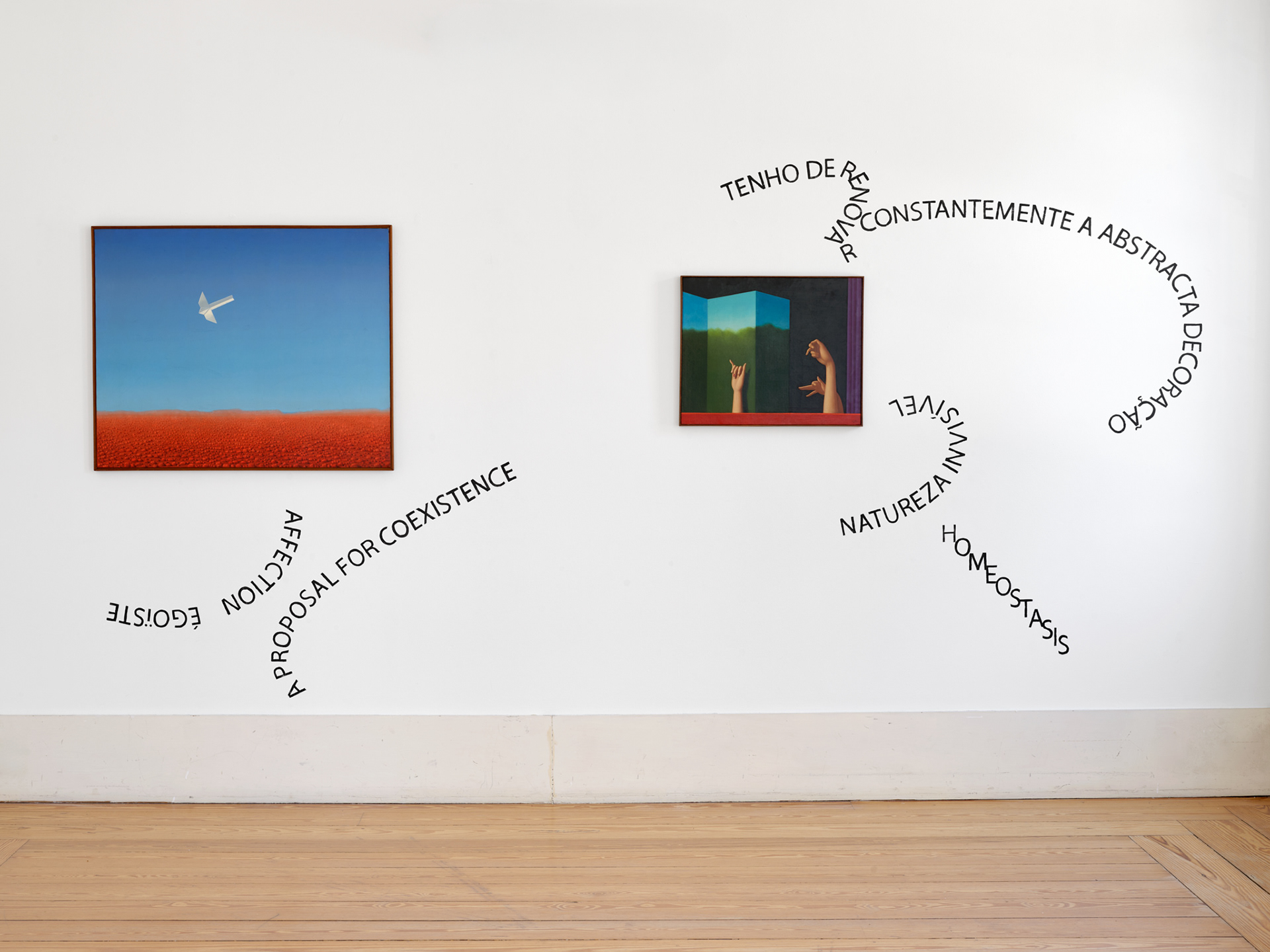
Tenho de renovar constantemente a abstracta decoração
Concrete Poem with L’Avion du Petit Prince (1985) and Mendigo com o seu cão insultando um homossexual (1982) by Eduardo Luiz, 2026
©Filipe Braga, courtesy Serralves Museum
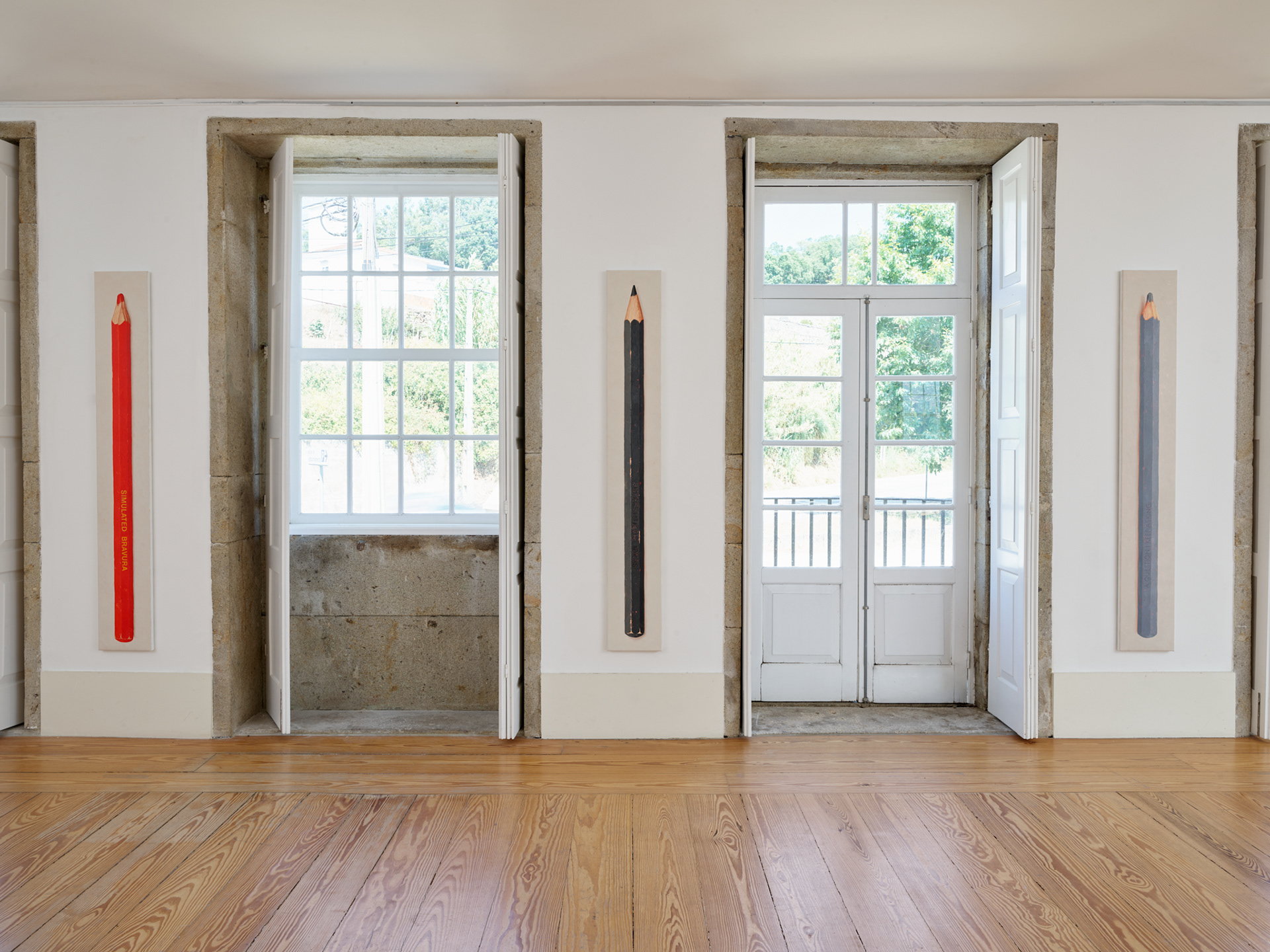
Simulated Bravura, Superstitious Ideas, A Question I Keep Asking
oil on linen cavas, 175x25 each, 2026
©Filipe Braga, courtesy Serralves Museum
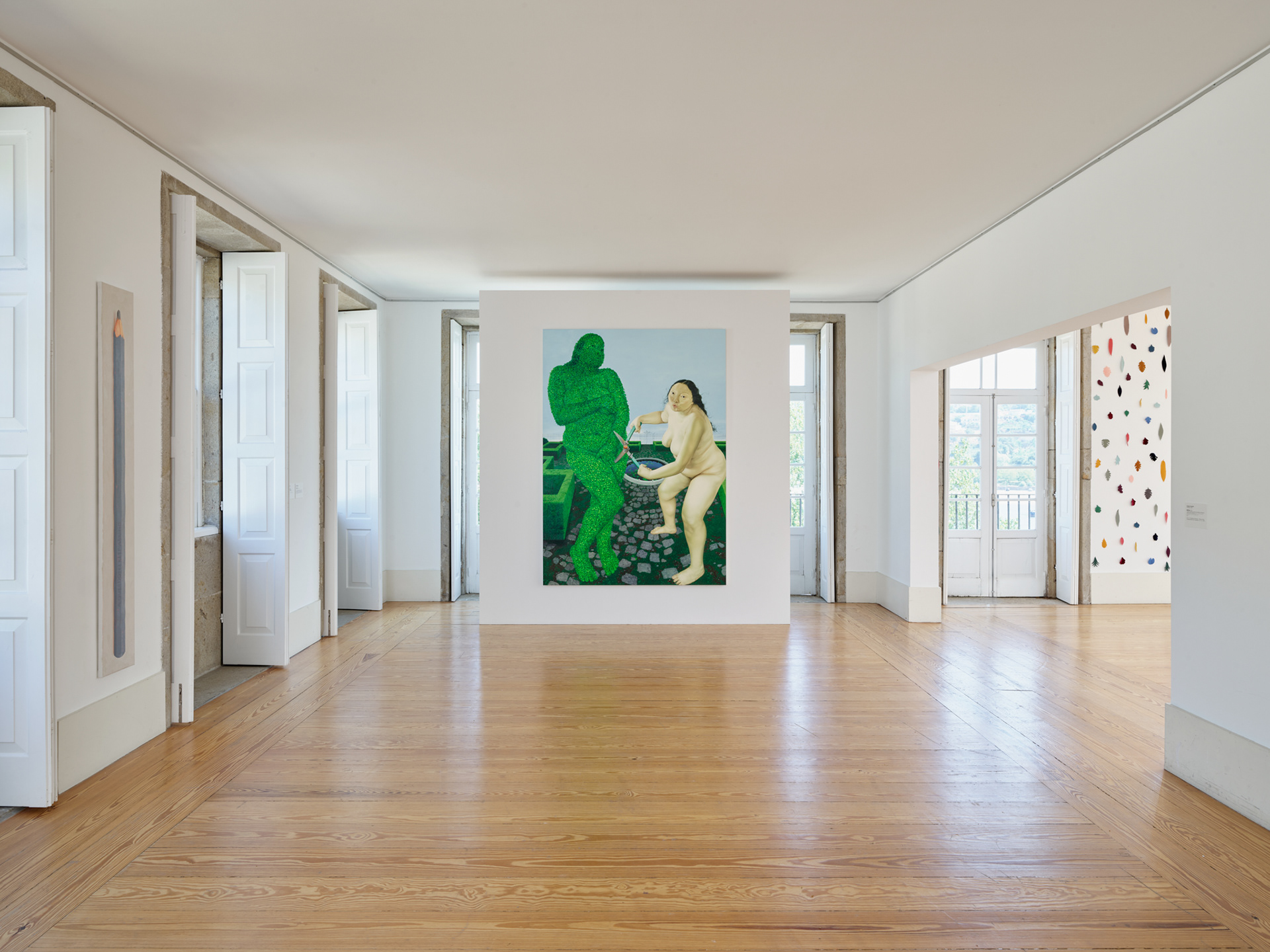
Exhibition View

©Filipe Braga, courtesy Serralves Museum
Exhibition View
©Filipe Braga, courtesy Serralves Museum
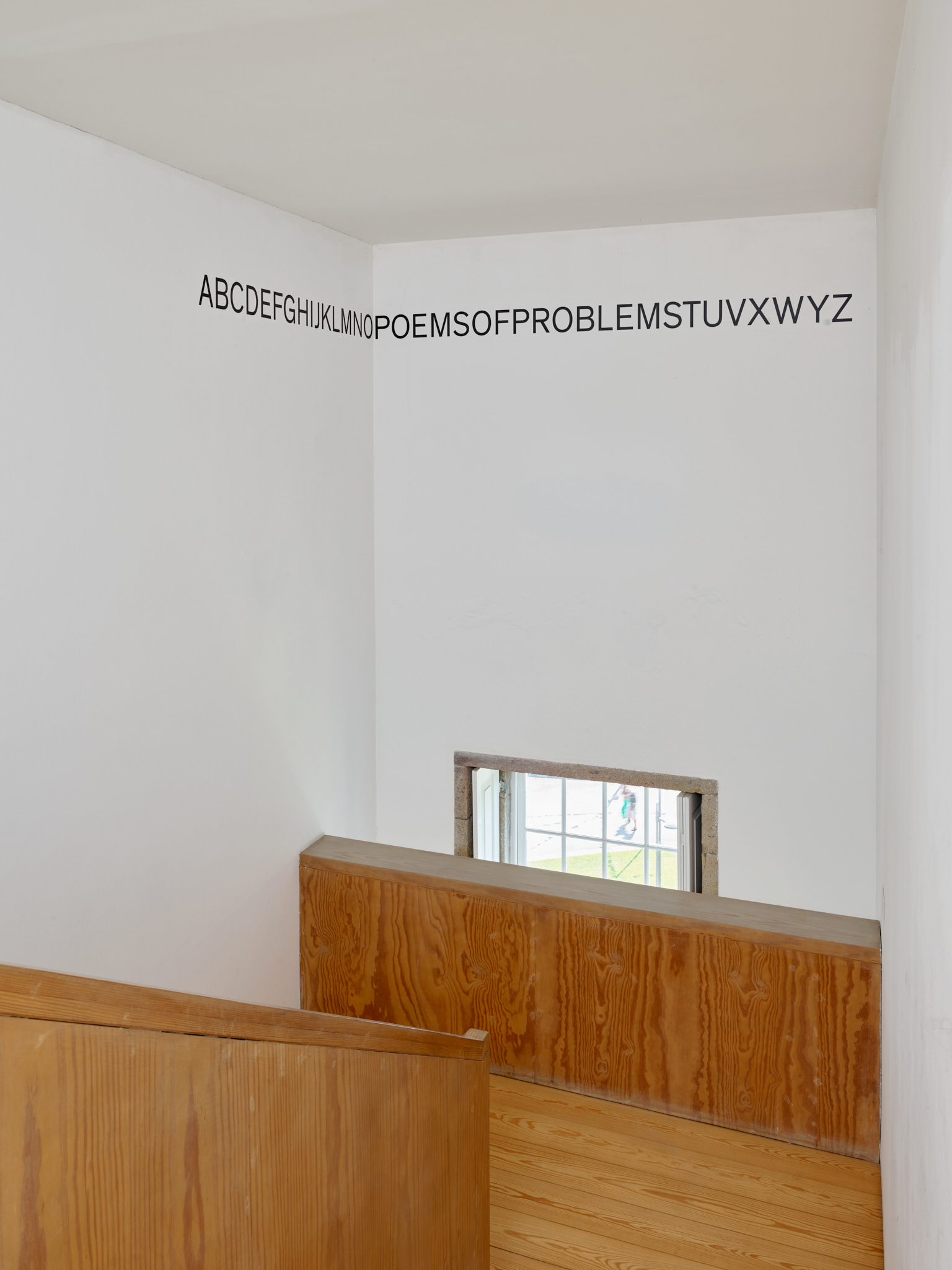
Poems of Problems
concrete poem, 2019

©Filipe Braga, courtesy Serralves Museum
WHAT THE NIGHT MIGHT BRING
concrete poem, 2026

©Filipe Braga, courtesy Serralves Museum
Exhibition View
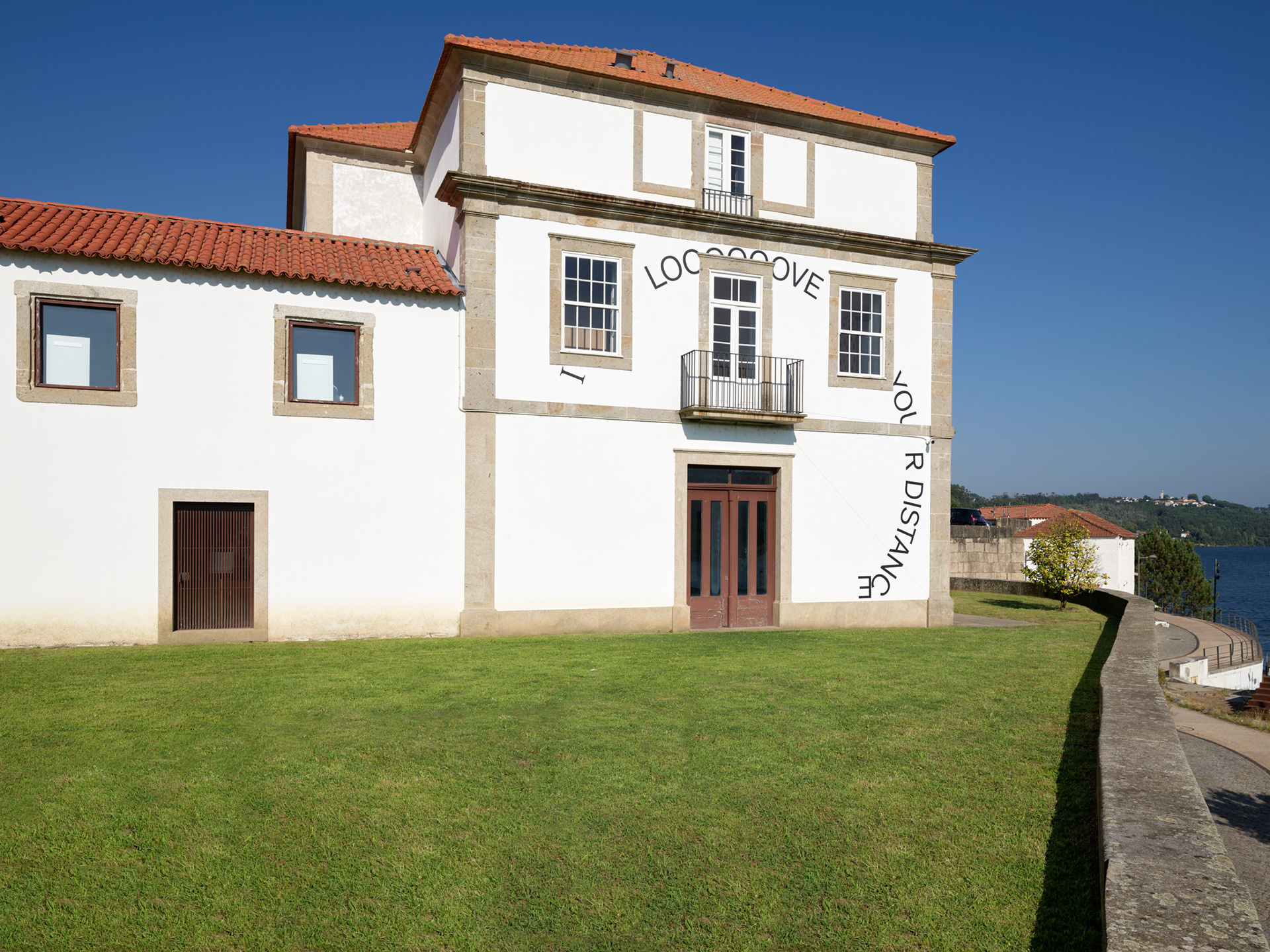
©Filipe Braga, courtesy Serralves Museum
I LOOOOOOOVE YOUR DISTANCE
concrete poem, 2026
Drawing on formal and conceptual codes, the paintings of Eduardo Luiz (Braga, 1932 — Paris, 1988) and the visual poems of Horácio Frutuoso (1991) in some way confront and converse with one another through their exercises and creative processes. One of the aspects to be analysed here is the conceptual relationship between the distinct artistic practices of the two artists. Frutuoso’s visual poem Tenho de renovar constantemente a abstracta decoração [I have to constantly update the abstract décor] is one of the works commissioned for the exhibition Paradise, from the series ‘Actaeon’s Curiosity’ [A curiosidade de Acteon], which was developed from Luiz’s two paintings. The two trompe-l’œil paintings reveal the rare density of his universe: intact and sometimes fragmented female bodies, absent or veiled faces, idyllic landscapes and fruits charged with latent eroticism, all set upon the familiar slates that he painted throughout his career. What distinguishes Luiz’s paintings is the rigour of their formal composition, grounded in exercises in image composition and filled with iconography and formal references to other artists, such as Paolo Uccello and René Magritte.2 For Luiz, the sign creates its meaning through form: the sign signifies itself. An example of this is the direct reference, in the painting L’avion du Petit Prince (1985), to Antoine de Saint-Exupéry, author of The Little Prince [Le Petit Prince], published in 1943. Maria João Fernandes described the painting, in an article in Jornal de Letras, Artes e Ideias on the artist, ‘as the Little Prince’s aeroplane, a paper aeroplane in a world of toys, toys for adults— children who have forgotten how to be children’. The painting Mendigo com o seu cão insultando um homossexual [Beggar with his dog insulting a gay man] (1982) becomes unsettling; it was executed in the same year in which he held his solo exhibition at Galeria 111, in Lisbon. Here, the painting is read in three moments: the image, the representation and the metaphorical dimension that emerges from the relationship between the two. On the stage of this puppet theatre are three hands referring to the three characters in the painting: the dog, the beggar and the gay man. Against the landscape background, one hand has the nail of the middle finger painted red, indicating femme-flagging, which emerged in the 1980s as a discreet visual code of identification within the queer community. In the context of the 1980s, marked by the AIDS crisis, a social concern can be inferred from this work. Social structures are questioned in the form of direct accusation: the pointing gesture re-enacts violence and fixes the queer body in a position of otherness. One of Horácio Frutuoso’s visual poems, whose practice unfolds through words inscribed and disseminated across the floor, ceiling and walls of galleries by means of synapses and associations, promotes a reflection on the urgency of putting love back into circulation in the intellectual market, bringing it back as an aesthetic regime. Although ephemeral, like the sets of semantic games he produces, this new poem, in a diary-like register, Tenho de renovar constantemente a abstracta decoração, is adapted from a line in Raul de Carvalho’s poem Mudança de residência [Change of Address], published in 1977, following the Revolution and the end of the Portuguese Colonial War. Like the works of the other artists in the exhibition, his poems seem to possess the lightness. In the relationship between this poem and Luiz’s two paintings, the text is not a caption to the images. Words and image coexist on the same plane and the sentences interact, so that the word ceases to explain the image and instead participates in the production of its own meaning, supported by the social tension portrayed in the puppet theatre. Two further visual poems conceived for the exhibition are also presented, one of them on the façade of the Casa Branca de Gramido, in Gondomar: I LOOOOOOOVE YOUR DISTANCE. This poem, visible from the banks of the River Douro, reflects on social and emotional distance, preserving each person’s identity in a conscious act of distancing. This is a characteristic aspect of twenty-first-century society, marked by a growing fear of surrendering oneself to the other and to the unknown. In the building’s skylight there is another visual poem that explores the charge of expectation, indeterminacy and possibility, in which everything that is hidden may become visible: WHAT THE NIGHT MIGHT BRING. The three paintings by Horácio that form part of the unfinished series ‘Ephemera’ establish, like his artistic practice, a relationship with writing and with the construction of identity. The pencils, which are exactly the artist’s height, bear inscriptions engraved along their sides that reflect the different personas who use them to write: Simulated Bravura, Superstitious Ideas and A Question I Keep Asking. They are emotions, personality traits and thoughts through which we build ourselves as we write in the pages of our diaries.
Excerpt from the exhibition text written by Luís Pinto Nunes