Sage Comme Une Image
Solo exhibition
Lisbon, 2020
In Sage comme une image, a series of paintings developed over the course of a year during the COVID-19 pandemic is presented, in which the studio and the artist himself are used as models and material for the expression and construction of image-poems, revealed as moments suspended in time that interrupt our passage through time as a whole.
With work derived from poetry, graphic design and literary expression, in this exhibition Horácio Frutuoso resorts to the exercise of translation, just like Saint Jerome. The creative process of constructing a poem was translated into images that gave rise to the paintings. Evoking the silence of the image, the title of the exhibition is a French expression used to describe a well-behaved child, which in English means ‘obedient as an image’.
As if it were a diary, the act of reading and writing, influenced by what is consumed, takes over everyday life, or even an escape from everyday life, in this case without struggle or resistance.
With work derived from poetry, graphic design and literary expression, in this exhibition Horácio Frutuoso resorts to the exercise of translation, just like Saint Jerome. The creative process of constructing a poem was translated into images that gave rise to the paintings. Evoking the silence of the image, the title of the exhibition is a French expression used to describe a well-behaved child, which in English means ‘obedient as an image’.
As if it were a diary, the act of reading and writing, influenced by what is consumed, takes over everyday life, or even an escape from everyday life, in this case without struggle or resistance.
Why write?
Write for whom?
Write about what?
Write for whom?
Write about what?
THE WORLD LOOKS AT US AND ATTACKS US, WE RESPOND WITH REALITY
©Bruno Lopes
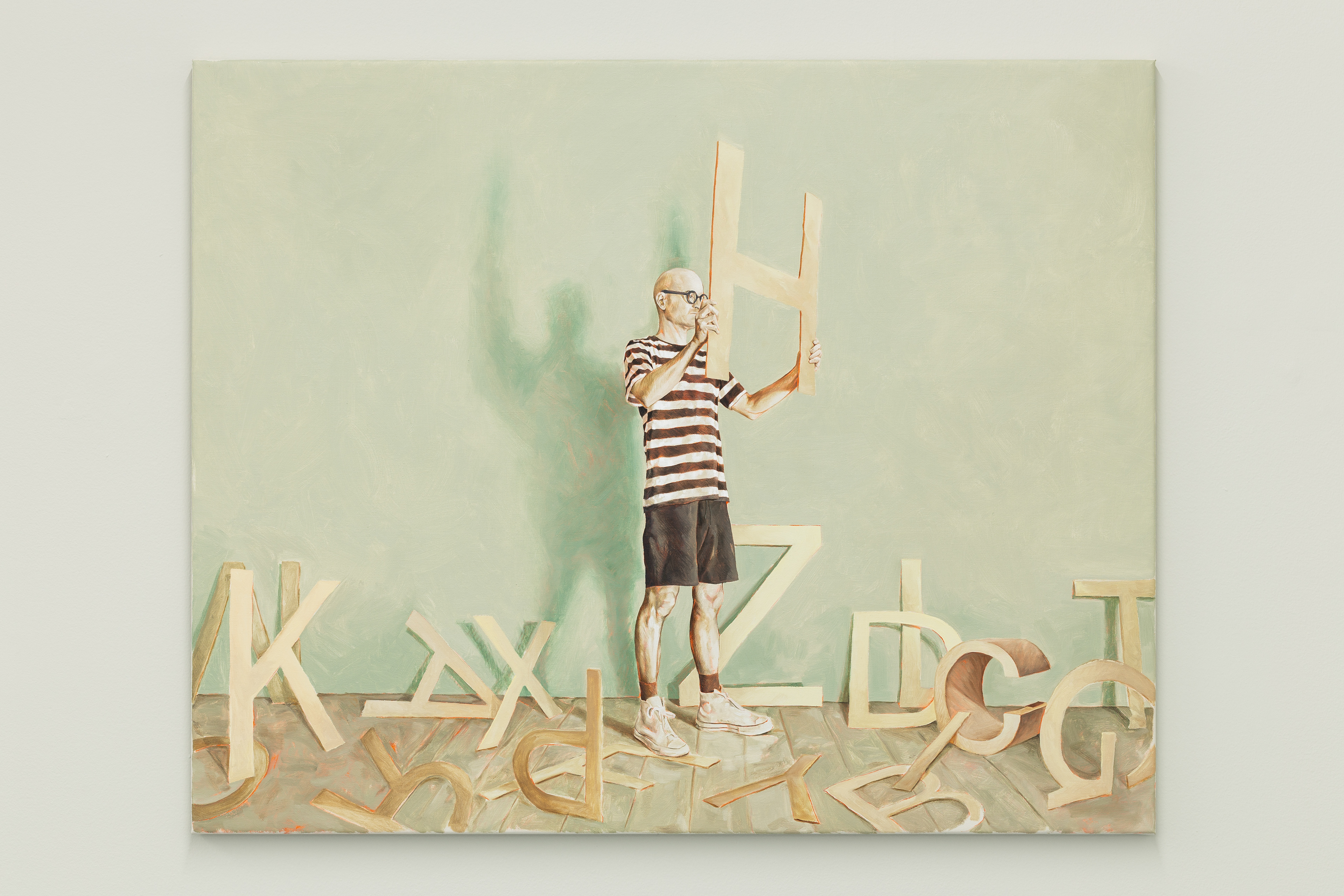
Stage (headbanger)
Oil on linen canvas, 80x100 cm, 2020
©Bruno Lopes
©Bruno Lopes
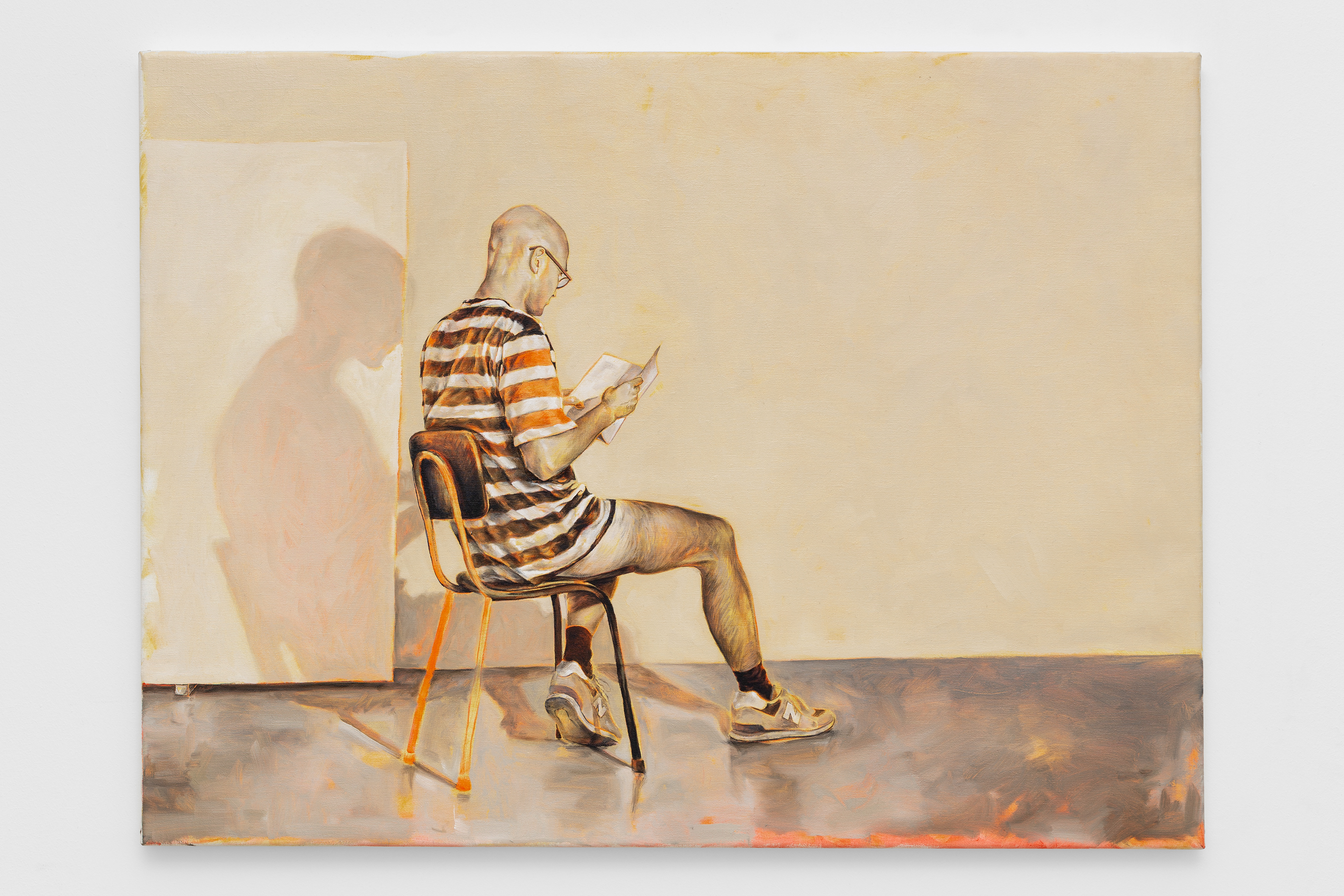
Sage comme une image
Oil on linen canvas, 60x80 cm, 2019

©Bruno Lopes
Shadow
Oil on linen canvas, 60x80 cm, 2019

©Bruno Lopes
Stalker (Tarkovsky)
Oil on linen canvas, 60x80 cm, 2020

©Bruno Lopes
Sermon
Oil on linen canvas, 60x80 cm, 2020
©Bruno Lopes
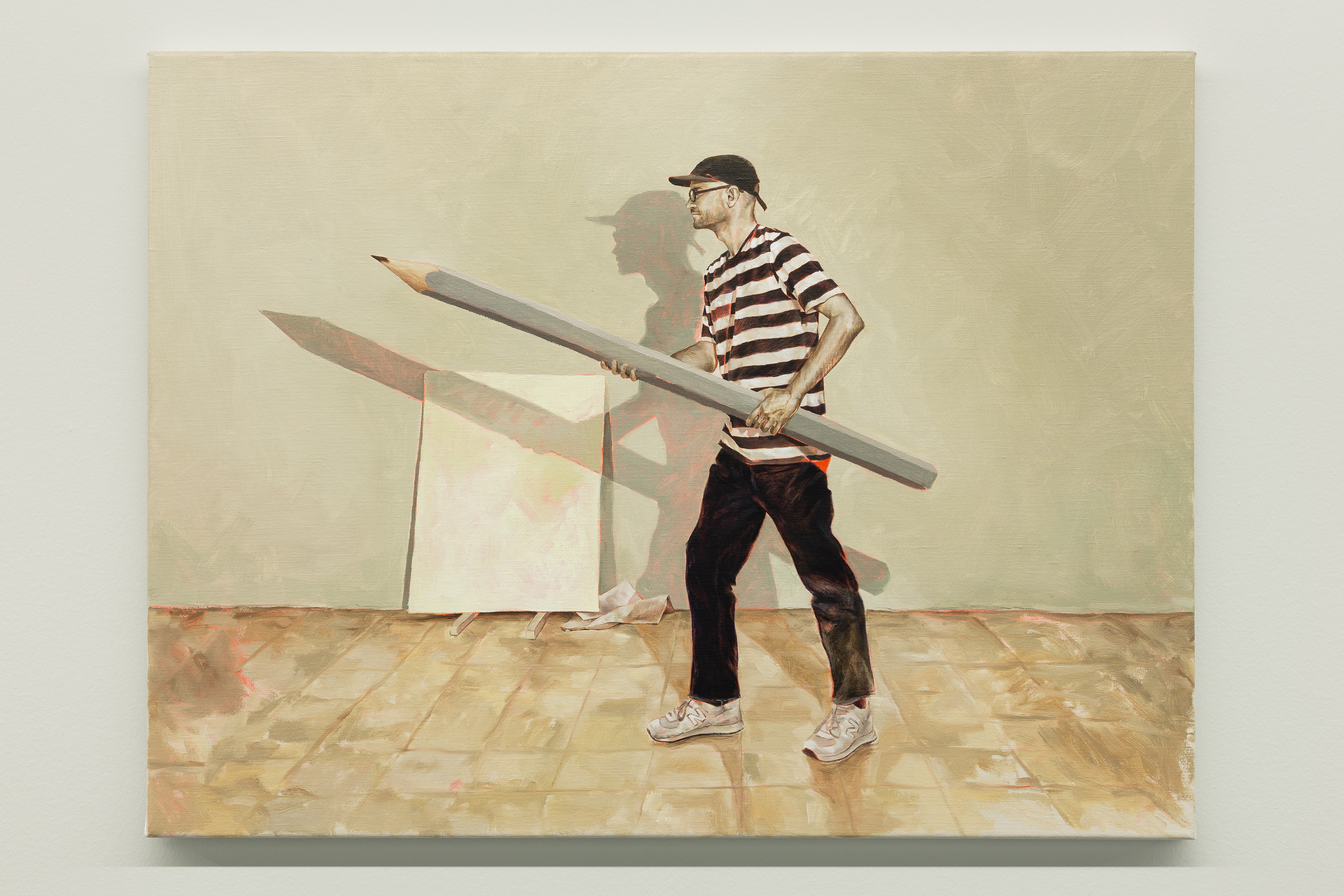
Surrender (right)
Oil on linen canvas, 60x80 cm, 2020
©Bruno Lopes
Surrender (left)
Oil on linen canvas, 60x80 cm, 2020

©Bruno Lopes

©Bruno Lopes
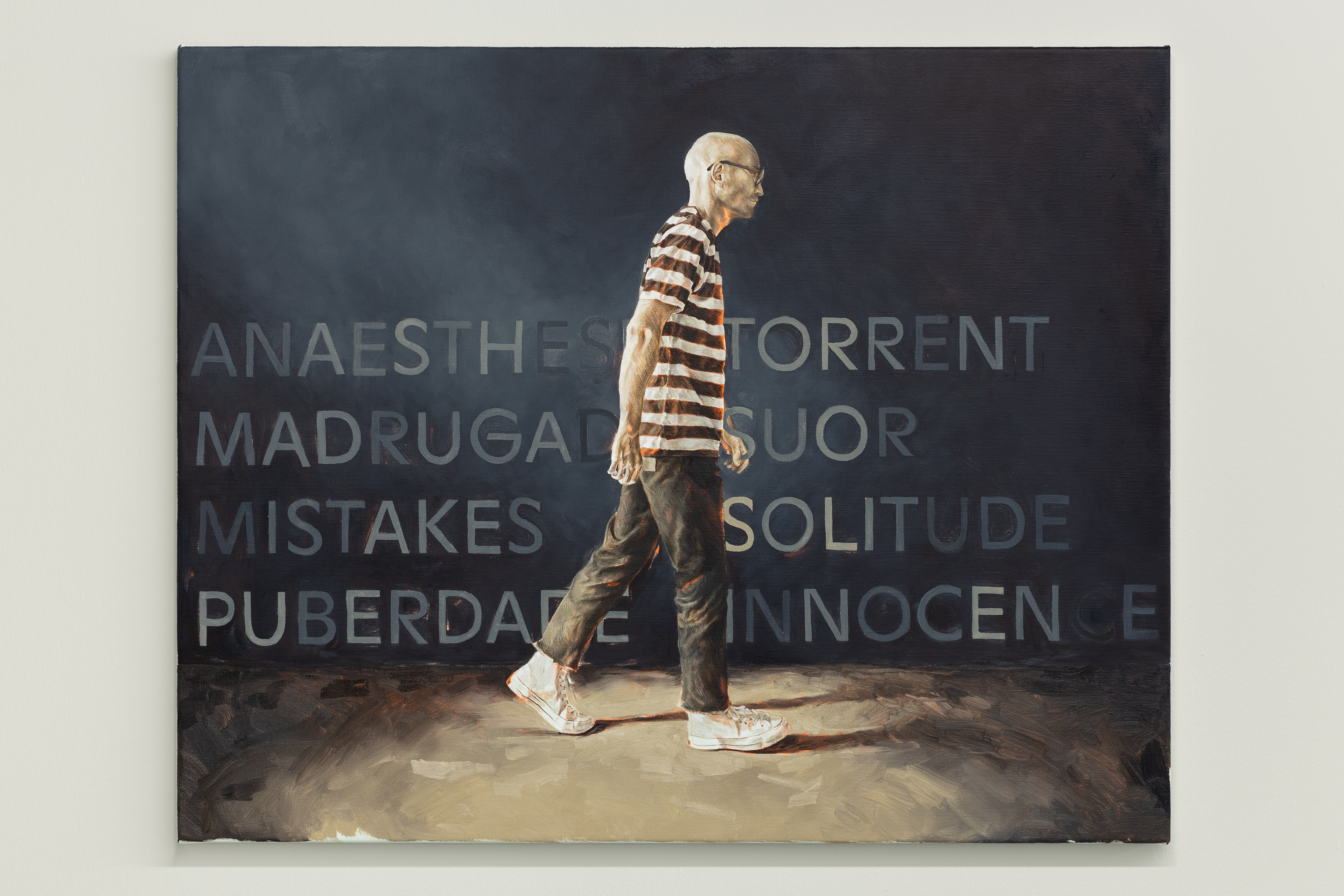
Cenário eterno
Oil on linen canvas, 150x200 cm, 2020
©Bruno Lopes
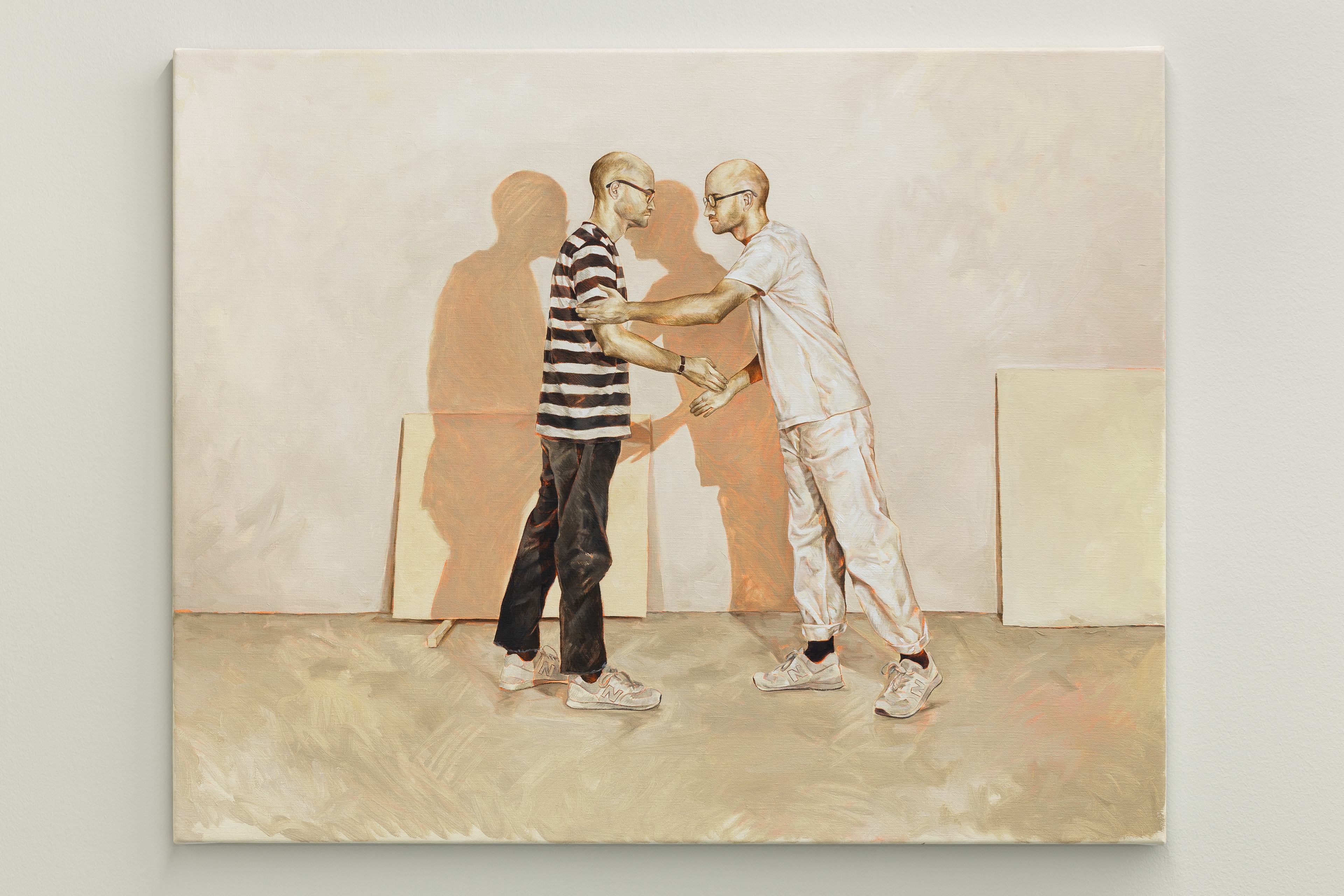
Against the moon (async)
Oil on linen canvas, 80x100 cm
©Bruno Lopes
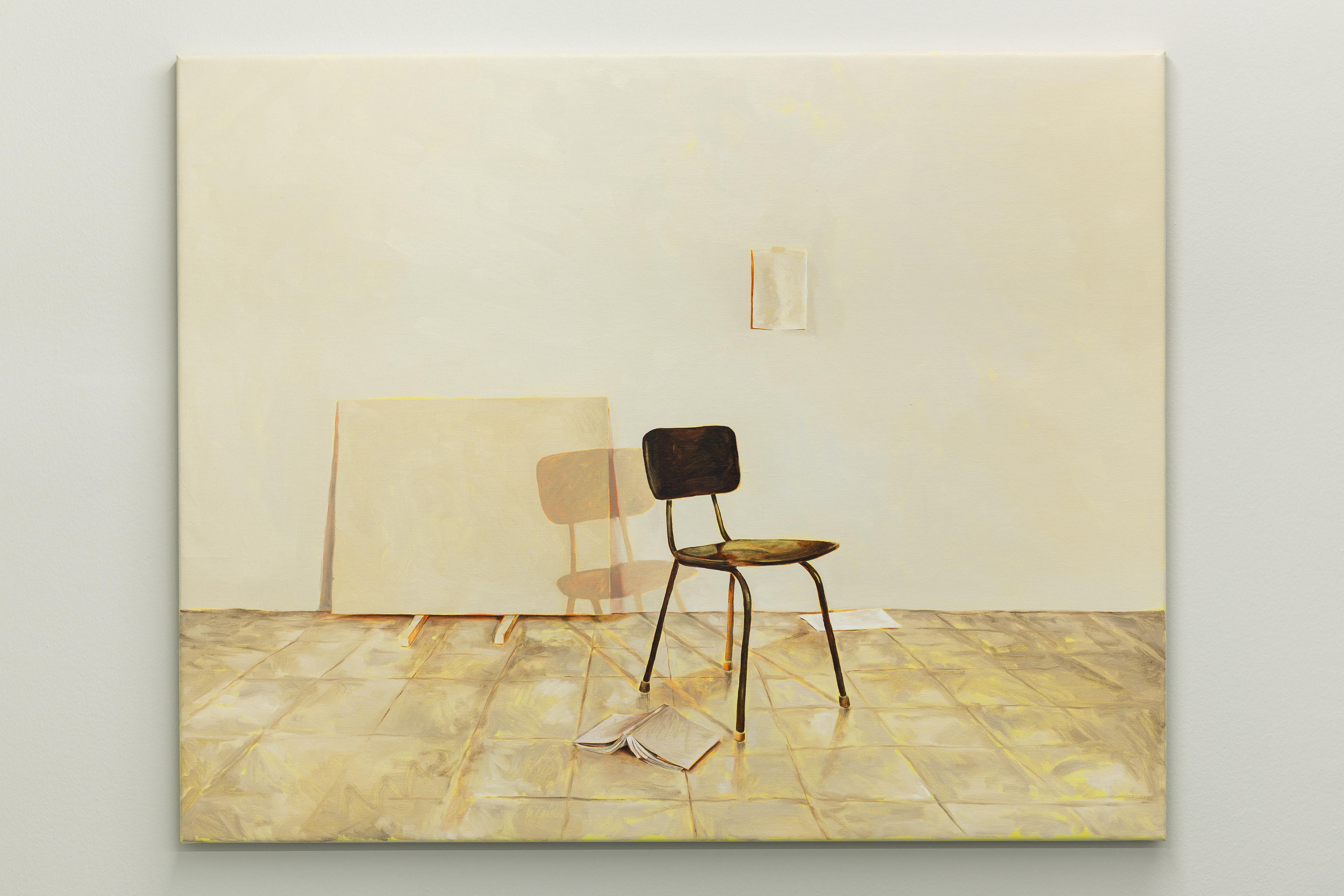
Reconciliation
Oil on linen canvas, 80x100 cm, 2020
©Bruno Lopes
Invisível (acto segundo)
Oil on linen canvas, 80x100 cm, 2020
©Bruno Lopes
Sentença
Oil on linen, 100 x 80 cm, 2020
Oil on linen, 100 x 80 cm, 2020
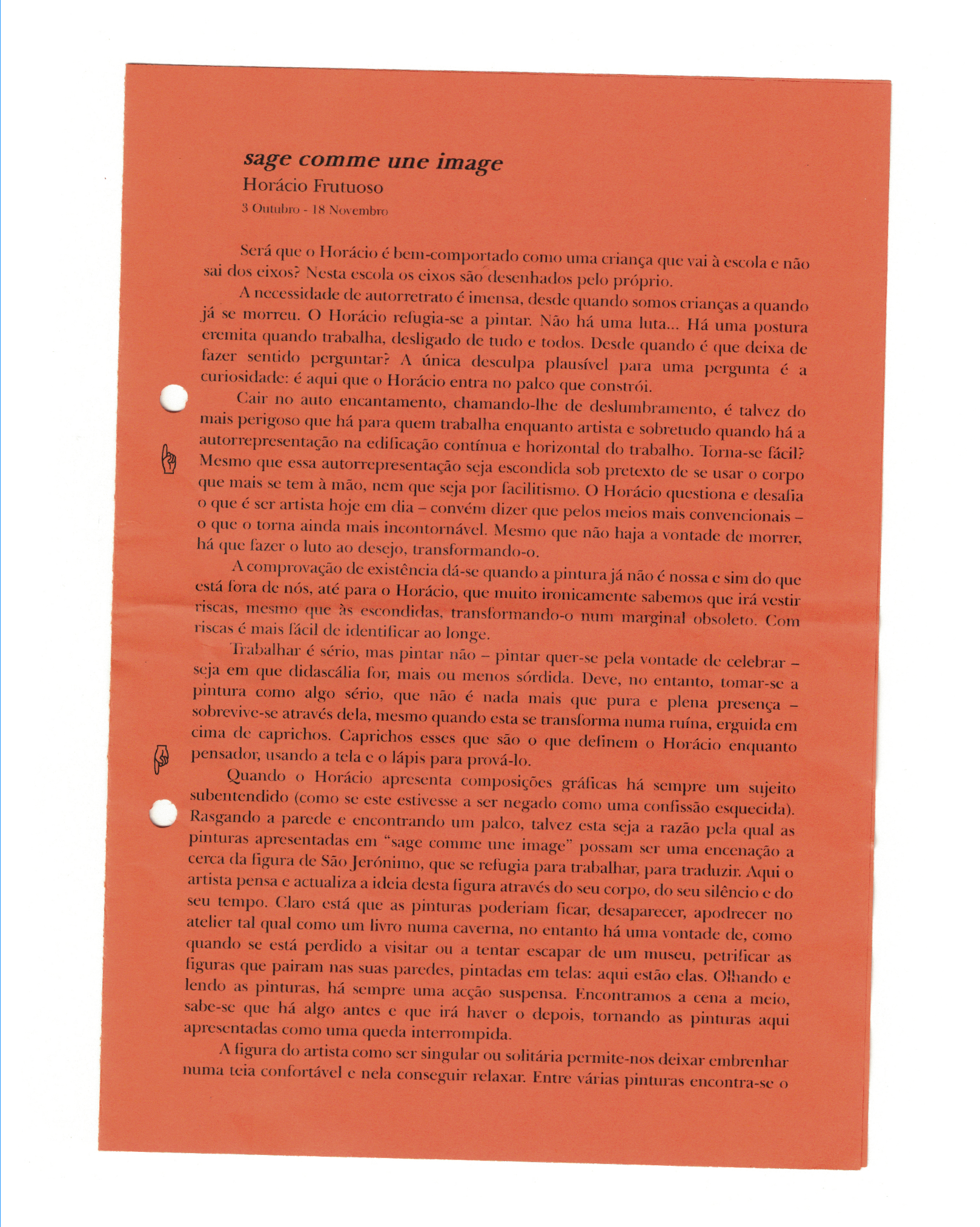
Could it be that Horácio is as well behaved as a child that goes to school and never gets off-track? In this school, it is Horácio himself who lays the tracks.
The need to self-portrait is tremendous, since when we were children until after our demise. Horácio’s refuge is painting. There is no struggle...There is a hermit posture when he works, tuned out of everything and everyone. Since when does it make sense to stop asking questions? The only reasonable excuse for a question is curiosity: and that is where Horácio enters the stage he builds. Falling on one’s own spell, calling it dazzle, it’s perhaps the most dangerous thing for an artist, mainly when there is self-representation in the continuous and horizontal construction of the work. Does it become easy? Even if this self-representation is hidden under the pretext of using the body that it’s close at hand, just for easeness sake. Horácio questions and defies what it means to be an artist nowadays – by the most conventional means we might add – and that makes him even more indisputable. Even without a death wish, desire must be mourned, by transforming it.
The evidence of existence emerges when the painting is no longer ours but from what is outside of us, even to Horácio, whom we ironically know will wear stripes, even if secretly, turning him into an obsolete outcast. Stripes make it easier to be identified from afar.
Working is a serious thing, but painting is not – one paints out of the desire to celebrate – no matter the caption, more or less squalid. The painting should, however, become a serious thing, being nothing more than pure and full presence – one can survive through it, even when it dwindles down to just a debris, built on top of vagaries. Those vagaries are what define Horácio as a thinker, using canvas and a pencil to prove it.
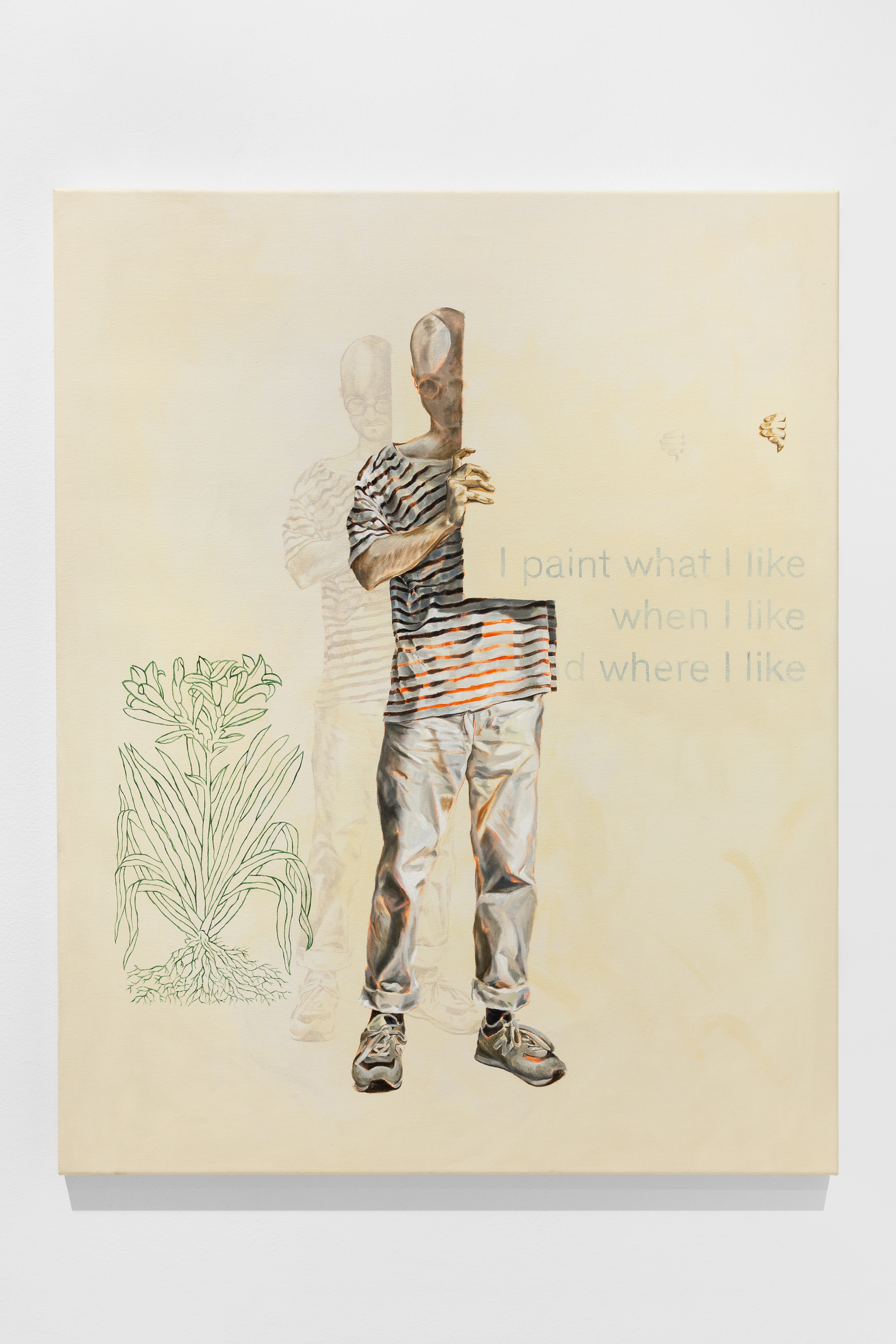
When Horácio presents graphic compositions, there is always an implicit subject (as if it was being denied like a forgotten confession). Tearing the wall and finding a stage might be the reason why the paintings presented in “sage comme une image” could be a representation of Saint Jerome that takes refuge to work, to translate. Here, the artist re-thinks and updates the idea of this character through his body, his silence and his time. Sure enough the paintings could stay, disappear, decay in the atelier like a book in a cave, however, just as if you were lost visiting or trying to escape from a museum, there is a will to petrify the figures that hover its walls, painted in canvas: here they are. Looking and reading the painting, there is always a suspended action.We walk in on an ongoing scene, we know something happened before, something else will take place after, which turns the painting on display into an interrupted fall.
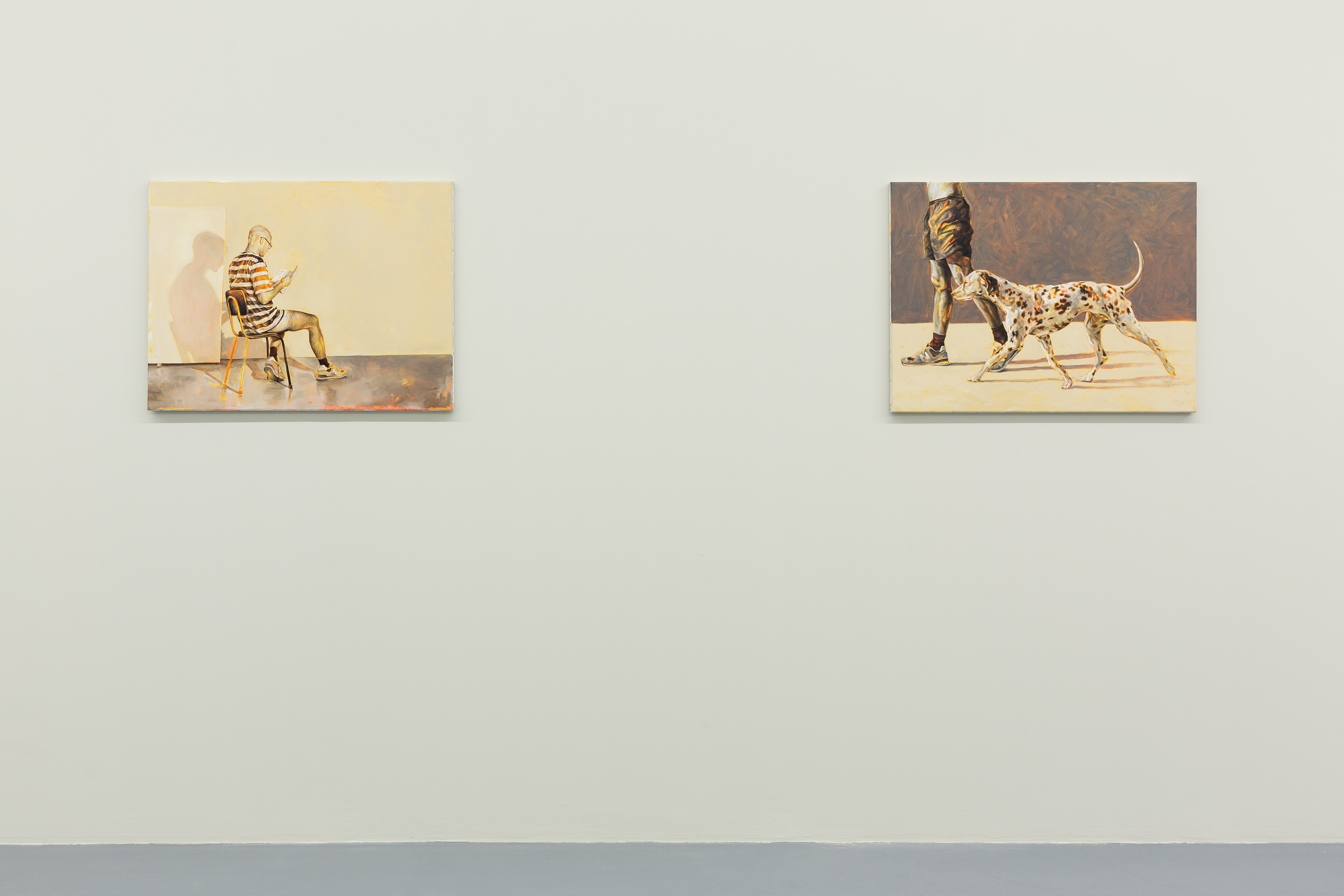
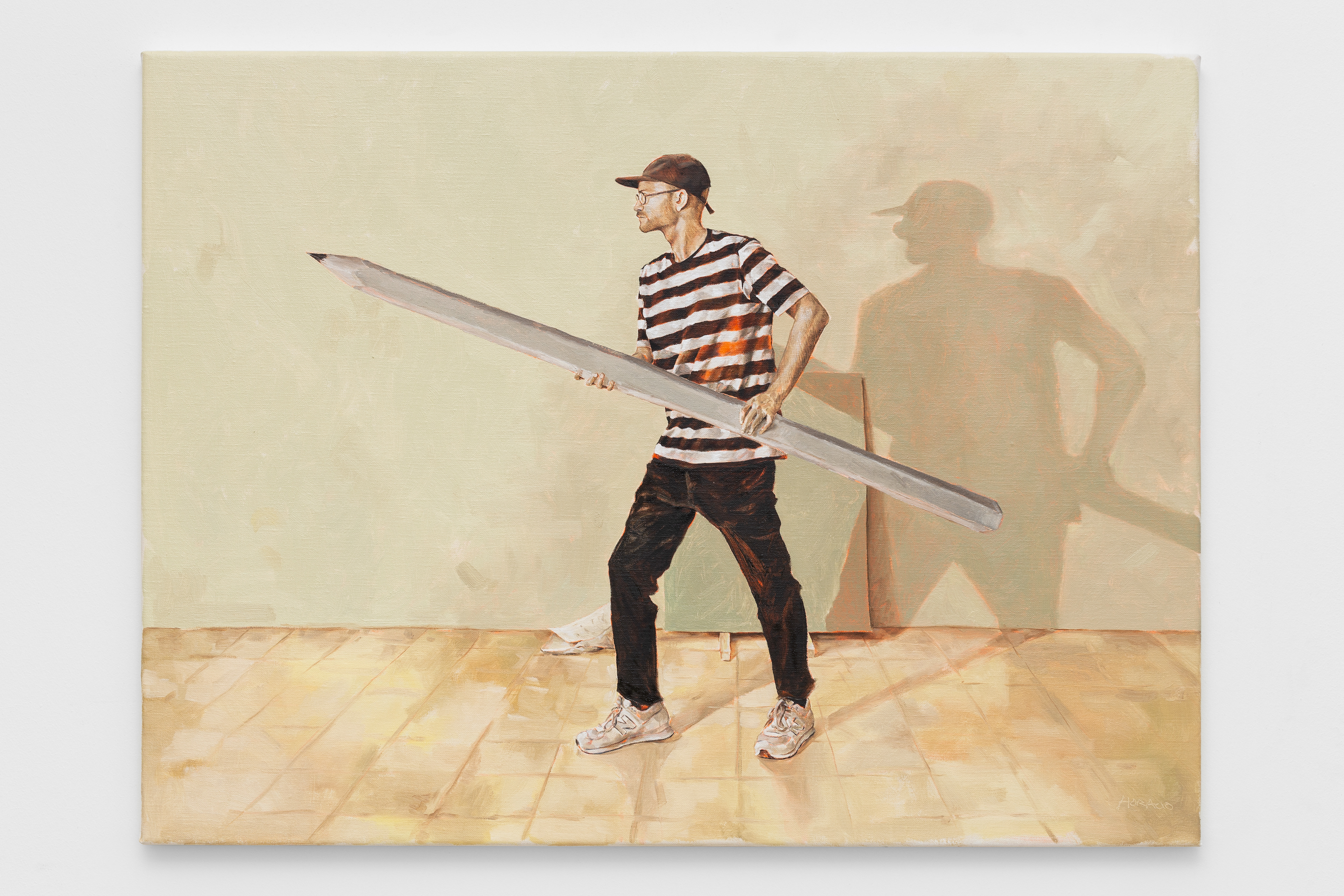
The image of the artist as a singular or solitary being allows us to immerse ourselves in a comfortable web and be able to relax on it. Among several paintings, one finds the artist reading (naked); holding a large pencil as if it was a war spear; greeting himself (Horácio has a twin brother - the parody goes on); inside a room, with several letters resembling a lost alphabet with the artist holding an “H”, its shadow projecting the shape of someone holding his hands up as if he was being robbed; strolling alongside a dalmatian (could it be the appearance of Saint Jerome? Since he was born in Dalmatia); surrounded by greyhounds, as if he was reading a forgotten poem to them, taming, enchanting them; walking in front of a wall with words, letters or even a poem; and, lastly, there is an empty chair with an open book on the floor besides it, as if Horácio had just fled the scenery rushing to inhabit another picture. Building up tension with all the paintings, there is a bigger one, that arises in diptych like an open book, as if it was a hermit’s diary. “HE WHO NEVER DIES IN LIFE IS DEAD FOREVER”. Within a battle cry, silence is invoked by a staged glare, in a neverending set where the faceless man reads, merging with the background and, albeit motionless, makes an escape, retreating to see clearly. Not indulging in addition, but in a variable change, breaks free or is released by the idea that the hand hints to that same addition. There is a new insertion of diverse ideas, objects and iconographies with their own meanings. Are we illiterate to read this book? Deep down there is such a need to place what we have and wish to have on top of the table, photograph these wishes and study them. Subsequently turning the wishes into objects and scenes, as invisible props or clues for a better understanding of its fears. It’s nothing but a compulsory trap assembled for those looking at the paintings, remaining unsated by the failure to understand, ending in infinite contemplation. Even so, there is a moment that is blocked from us, when jumping into the painting we are confronted by the gritting teeth Horácio implements on the canvas, like a self protecting dog.
The only image staring at us directly is a ghost. One quickly realizes, by the footwear, the watch or even the eyes, that it’s Horácio who is staring at us. While assimilating the paintings, there is an image that is stuck in my mind: after a day of work, Horácio leaves his head in a platter at the atelier, going home solely with the body, without asking for anyone’s help to find the way.
There is a story without narrative, as if all the canvas make up a patch poem about the reason to be here. The relevance of this exhibition lies in a simple and thorough gesture, in its narrowest extent, breaking the news that we are alive and celebrating. Walking the world towards a shared navel, Horácio goes to an endless lawn, with a desire to lie down and fall asleep.
Fernão Cruz, September de 2020
About this exhibition
Articles: