A Brilliant Anatomy
Solo Project
Arco Madrid - Galerias Municipais, 2025
Curated by Miguel Von Hafe Perez
©Bruno Lopes
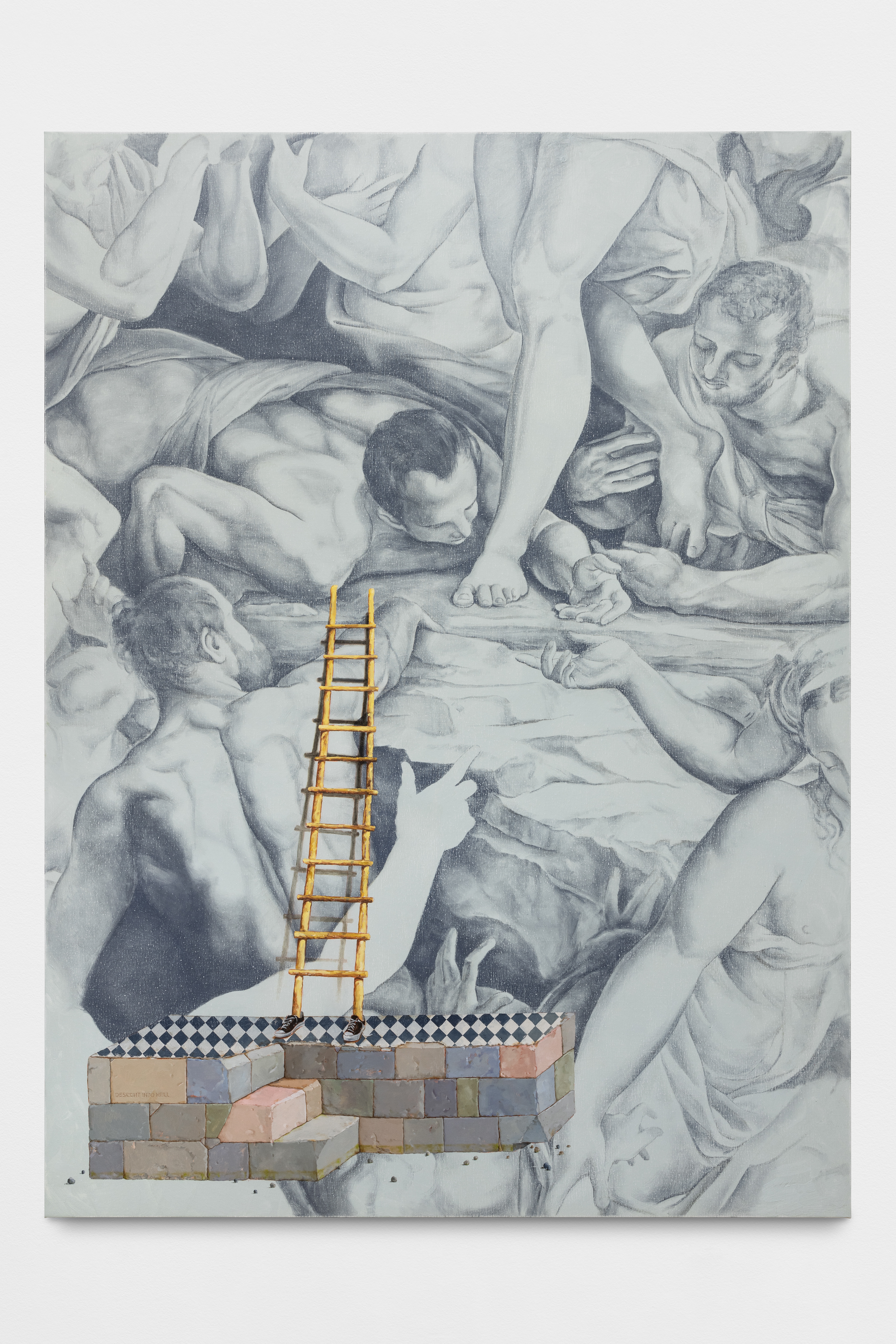
The Passage
oil on linen canvas, 200x150 cm, 2025
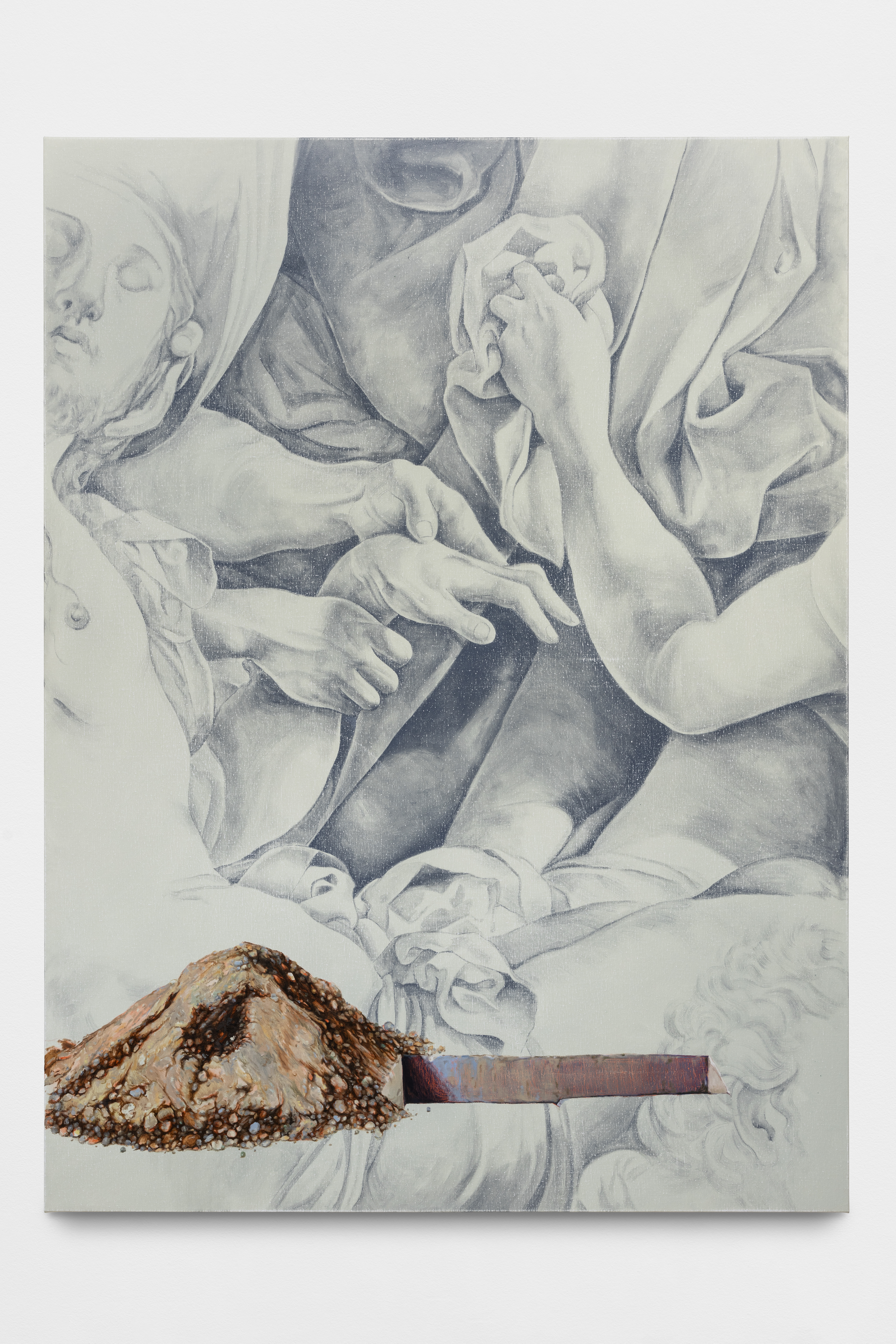
©Bruno Lopes
Eternity Now
oil on linen canvas, 160x120 cm, 2025

©Bruno Lopes
The Juvenile Barricades
oil on linen canvas, 120x90 cm, 2025
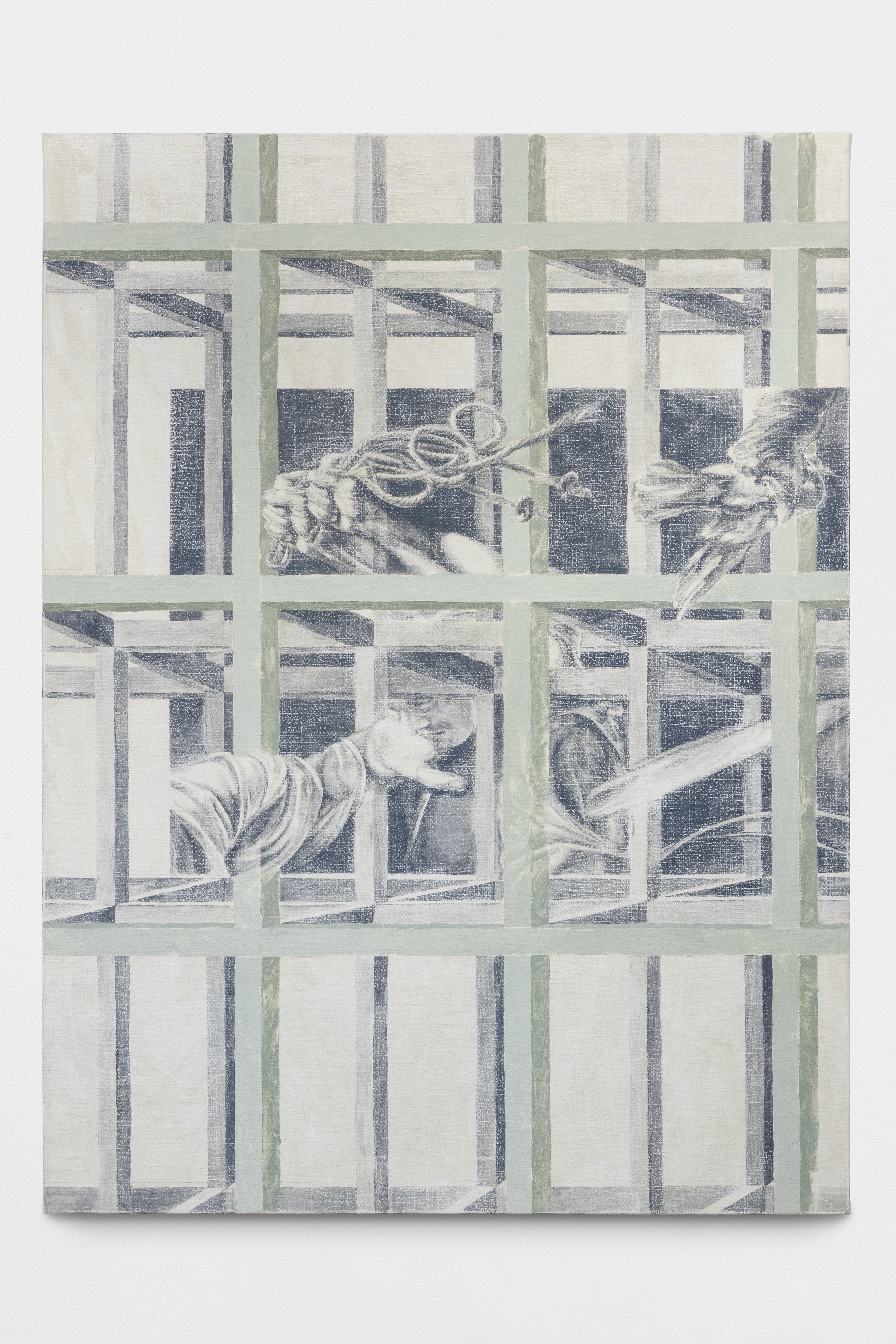
©Bruno Lopes
Divine Structures
oil on linen canvas, 120x90 cm, 2024
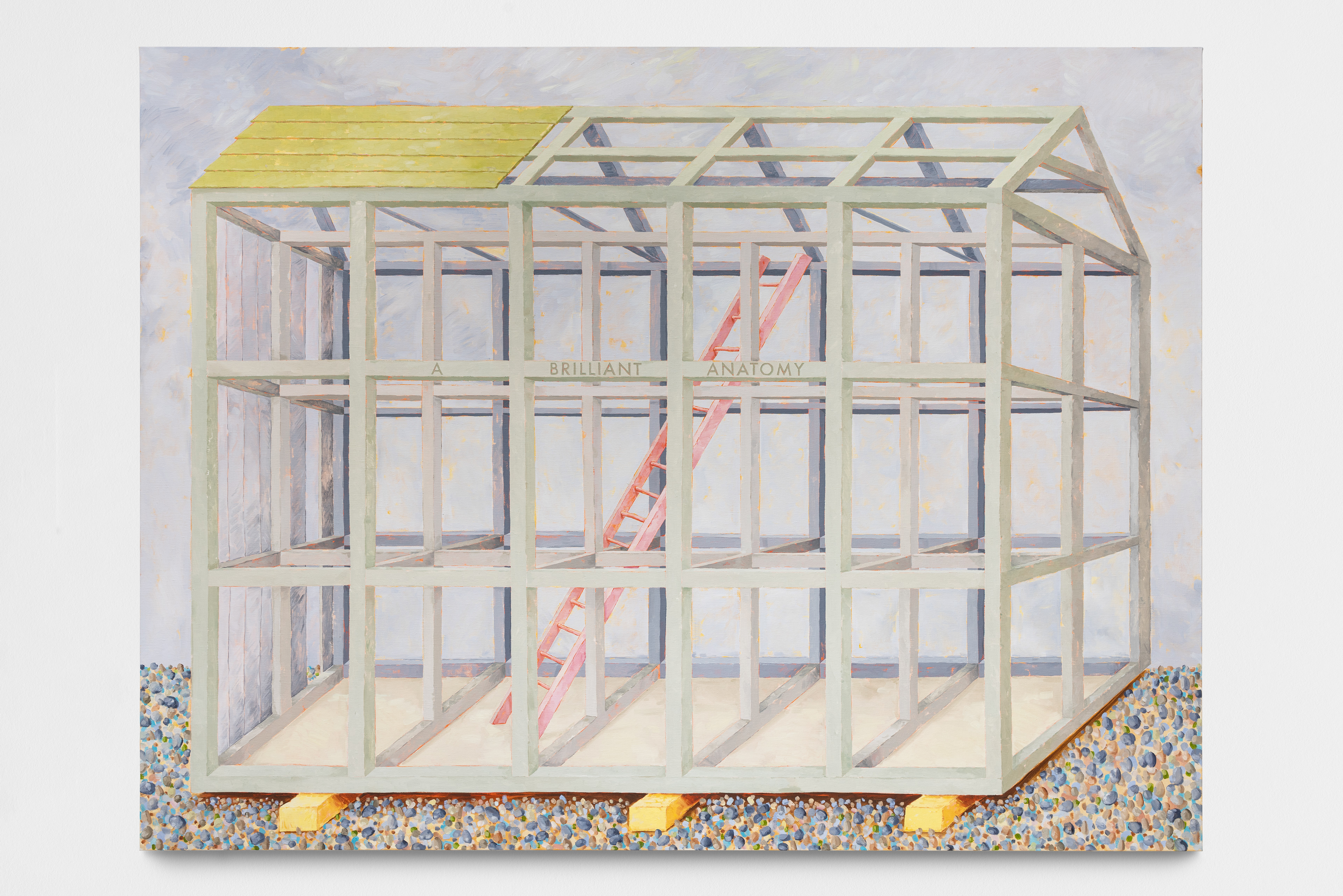
©Bruno Lopes
A Brilliant Anatomy
oil on linen canvas, 150x200 cm, 2024

©Bruno Lopes
The Ghosts Of My Friends
oil on linen canvas, 160x120 cm, 2025
Rise and fall (against banality)
Miguel von Hafe Pérez
There is a strange sense of untidiness in Horácio Frutuoso’s paintings. Formally and conceptually, these works refer to a non-space-time territory. This is still one of the great strengths of painting as a discipline that has been the target of so many announced deaths.
In the tradition of the contemporary palimpsest, where artists such as Robert Rauschenberg or Sigmar Polke stand out, it is refreshing to see how an artist still trusts in the power of the image as a mental construction that defies the most perfidious logics of the digitalization of the world.
The exhausting trivialization of the contemporary visual apparatus, designed for portable devices, demands an acute critical response. Languages multiply in hermeneutic slimming and the recipient becomes increasingly infantilized, which has led to dangerous civilizational regressions: politics made up of reasoning of an unimaginable bizarreness, authoritarian drifts based on obscurantism, generalized satisfaction pursued in determinants of virtual interaction.
The weight of a word or the density of a brushstroke, are they still viable antidotes in this constant becoming erected from nanoseconds?
Horácio Frutuoso is an author who has anchored his career in the use of words and images. Close to the visual freedom that the pioneers of experimental poetry began to create in the sixties of the last century, his linguistic formulations are based on contexts that are not always transparent, where autobiographical references appear as catalysts for an empathetic openness with the viewer: “I write myself with mistakes”, reads one of these texts exhibited at the Poetry Club exhibition at the Serralves Museum in 2019.
The assumption of the roughness of lived life in opposition to imagistically manipulated life is fundamental to much of this author’s practice. It is in the consolation of reading, in the enjoyment of cinema and, above all, within the history of art itself that he will anchor a possibility of vital inscription in this inevitable journey of overcoming finitude.
It is, in fact, the shadow of death and its spectres, the opposition of a telluric and carnal feeling and the possibility of ascension and overcoming, that dialectically determine a large part of the ancient and coeval existential enigmas.
The Passage and Eternity Now are two paintings that fragmentarily appropriate two classics: Descent of Christ into Limbo (1552) by Bronzino and The Deposition from the Cross (c.1525-28) by Pontormo. In both, the details of the bodies in grisaille disidentify the scenes and the chromatic voluptuousness of the originals. It’s a sort of diffuse memory that differs in its religious specificity. The disturbing breaking point comes from the disruptive inscription of colored elements within this backdrop: a ladder with youthful footwear in Christ’s Descent into Limbo, and an open grave above the Deposition from the Cross. These are two situations that clearly point to moments of transition in the opposite direction. The possibility of ascent or escape and, in opposition, the expected fall or irremediable final destination.
Allegories of the fugacity of existential determinants that can be resolved by faith or circumstantial pragmatism. Without any kind of moralistic apology, the paintings refer to timeless determinants of the fragility of the carnal self, in opposition to the timeless and unfinite purposes of artistic thinking and creation.
Returning to the beginning of the text, this is a critical and undazzled view of a perception of contemporaneity as a dark ages, where a catastrophist hedonism amounts to squandering the most basic balances (social, ecological and political).
A third painting, The Ghosts of My Friends, depicts decorative motifs that mimic marble and stone decorations. The simulation of the simulacrum, in a kind of trompe l’oeil, is here pure opacity. The non-representation becomes phantasmatic by allusion in the title. Evidence is artifice - all painting is artifice - in the sense that it subtracts from reality what is established in it precisely as a misleading skin. Once again, an eloquent and deceptive commentary on an increasingly elusive reality.
As in the poetic articulation of silences, these paintings lead to a state between images, from references to disruptions, from putative hermeneutic transparency to the straightness of the disturbing obvious.
Horácio Frutuoso works in the interstices of meaning to detach himself from banality. He is medieval, modern and contemporary in his time. In its time.